What Is a Private 5G Network? Why Enterprises Are Adopting It at Scale in 2026
- Amantya Technologies
- 2026-05-25, 06:30 am
- Private 5G Network
- Private 5G network , Private 5G , Private cellular network , Private 5G network providers
What Is a Private 5G Network? Why Enterprises Are Adopting It at Scale in 2026
Enterprises are rapidly adopting private 5G networks because they deliver what traditional connectivity cannot - guaranteed performance, full control, and the ability to support real-time, AI-driven operations at scale.
This shift is already underway.
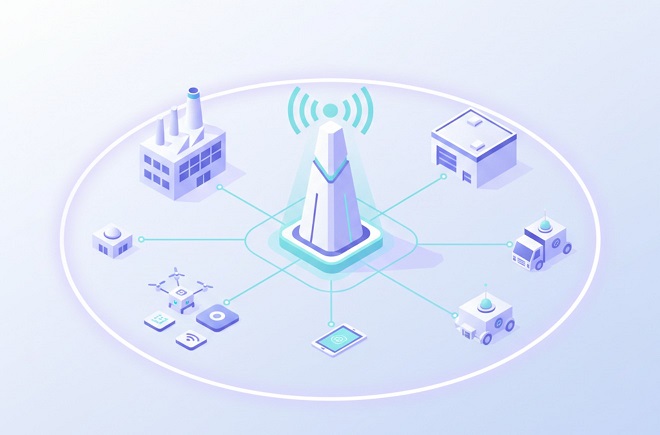
What Is a Private 5G Network?A private 5G network is a dedicated, enterprise-owned mobile network designed for environments such as factories, ports, campuses, and smart cities, delivering secure, high-performance connectivity for real-time operations. Also referred to as a private cellular network or private mobile network, it enables organizations to run applications like automation, IoT, AI, and edge computing with full control over network behavior. Unlike public networks, a private 5G network is not shared. It offers exclusive access, predictable performance, localized data control, and enterprise-grade security - all tailored to specific operational needs. A private 5G network is not just an upgrade in connectivity - it is a shift in how networks are designed. And that design advantage is precisely why adoption is accelerating across industries. Instead of adapting operations to network limitations, enterprises can now design networks around their operations. That is why adoption is accelerating across industries where performance, reliability, and control are critical. |
The market data reinforces this momentum. The private 5G market is projected to grow from $3.86 billion in 2025 to $17.55 billion by 2030, at a CAGR of 35.4%, according to MarketsandMarkets. Other projections go even further - with estimates crossing $100 billion to $150 billion by the early 2030s.
Despite differences in absolute numbers, the direction is consistent. And that consistency is important.
It signals that private 5G is not being driven by a single trend, but by the convergence of several structural forces: the rise of AI, the acceleration of industrial automation, the expansion of edge computing, and the explosion of IoT.
Individually, each of these trends increases the demand for better connectivity. Together, they create a compounding effect - one that existing network architectures struggle to support.
This is why private 5G is no longer emerging as a niche capability. It is becoming a foundational layer of enterprise infrastructure.
This is not incremental growth.
It is a structural shift in how enterprise networks are built and operated.
Why Private 5G Is Rising Now - The Real Trigger Behind the Shift
The surge in private 5G adoption is often attributed to the evolution of 5G technology itself.
But that explanation is incomplete.
The real driver is a deeper shift in how enterprises operate.
AI, automation, and connected infrastructure are no longer experimental - they are now embedded into day-to-day operations. Enterprise environments have evolved into real-time systems, where decisions, actions, and responses must happen instantly.
And these systems require something traditional networks were never designed to deliver:
consistent, predictable performance.
This is the real trigger behind private 5G adoption.
Across industries, operations are becoming more dynamic and time-sensitive. Manufacturing floors are deploying robotics that must respond in milliseconds. Logistics networks are coordinating moving assets across vast geographies in real time. Healthcare systems are connecting critical devices where even minor delays can have serious consequences.
These are not incremental upgrades. They represent fundamentally different operating environments - ones that depend on reliability at every moment.
This shift is clearly reflected in industry data. Private 5G adoption is accelerating at around ~42% CAGR, driven largely by demand from AI, IoT, and edge computing. Manufacturing alone accounts for ~32% of private 5G deployments, while regions like Asia-Pacific are seeing rapid growth due to large-scale industrial digitization and spectrum availability.
The Structural Problem with Traditional Enterprise Networks
To understand why private 5G is gaining ground, it helps to look at what is breaking in current enterprise environments.
Most organizations today rely on a combination of Wi-Fi, wired infrastructure, and public mobile networks. Individually, each of these technologies serves a purpose. But together, they create a fragmented foundation that struggles to support modern operational demands.
Wi-Fi, for instance, operates on shared spectrum and is highly susceptible to interference. In dense or high-mobility environments, performance becomes inconsistent. Public mobile networks, while offering wide coverage, are designed for general purpose use - not for the specific control and customization enterprises require.
For years, these limitations were manageable because enterprise systems could tolerate some level of delay or variability.
That is no longer the case.
Modern enterprise environments now include thousands of connected devices, autonomous systems moving across large areas, and real-time analytics pipelines feeding AI-driven decisions. In such environments, even small inconsistencies in network performance can disrupt operations.
What was once a minor limitation has now become a critical bottleneck.
Traditional networks were never designed for this level of precision.
And that is exactly where private 5G changes the equation.
By delivering consistent, reliable behavior, even under varying conditions, private cellular networks provide the level of control and predictability that modern enterprise systems demand.
What Changes with a Private 5G Network - Beyond Speed and Coverage
Private 5G is often positioned as a faster or more secure alternative.
But speed and security are only surface-level benefits.
The real transformation lies in control.
With a private 5G network, the enterprise no longer adapts to the network - the network adapts to the enterprise. It gains the ability to define how connectivity behaves across latency, bandwidth, priority, and access.
This changes the nature of performance.
Latency becomes predictable instead of variable. Coverage is engineered to match the environment rather than left to chance. Mobility becomes seamless, allowing devices and systems to move without disruption.
More importantly, the network becomes programmable.
This has far-reaching implications. Instead of working around connectivity limitations, enterprises can design networks that align directly with operational needs.
Consider a production line using computer vision for quality inspection. These systems depend on consistent, low-latency data flow. In traditional environments, performance can fluctuate due to interference or network load. In a private 5G environment, that performance can be controlled and maintained - ensuring reliability at every step.
The same applies to large industrial or logistics environments, where mobility is critical. Devices moving across wide areas often face dropped connections or inconsistent handovers. Private cellular networks eliminate this friction by enabling seamless transitions and stable connectivity across the entire environment.
Over time, this leads to a deeper shift.
The network moves beyond being a passive layer of connectivity and becomes an active part of operations. It can prioritize critical workloads, isolate sensitive data flows, and adapt dynamically as conditions change.
In essence, it becomes programmable infrastructure.
That is why private 5G is not just a network upgrade.
It is a platform for operational control.
Industry Adoption: Where Private Cellular Networks Are Already Transforming Operations
The adoption of private 5G is most visible in industries where operational failure has immediate consequences.
Manufacturing is one of the strongest examples. According to industry reports, it accounts for nearly one-third of private 5G deployments globally, driven by the need for automation, robotics, and predictive maintenance. In these environments, even minor network inconsistencies can disrupt production, making reliability non-negotiable.
In logistics and port operations, the scale and complexity of operations create a different challenge. Assets are constantly moving, environments are vast, and coordination must happen in real time. Private 5G enables continuous connectivity across these dynamic environments, supporting everything from automated cranes to fleet tracking systems.
Healthcare presents another dimension, where the priority is not just performance but also security and compliance. Private 5G networks allow sensitive data to remain within controlled environments while ensuring uninterrupted connectivity for critical devices.
Across these industries, the pattern is consistent.
Private 5G is not being adopted as a technology upgrade.
It is being deployed as a solution to operational constraints.
The Hidden Complexity: Why Many Private 5G Initiatives Stall
Despite strong momentum, a significant number of private 5G initiatives fail to move beyond pilot stages.
This is not due to lack of interest or investment. It is due to complexity.
A private 5G network is not a single system. It is a combination of multiple layers - radio access networks, 5G core, edge infrastructure, devices, and application integration.
Each of these layers must work seamlessly with the others.
When approached as separate components, deployments become fragmented. Integration challenges arise. Performance becomes inconsistent. Scaling becomes difficult.
This is why many enterprises find themselves stuck - with successful pilots that cannot be translated into production environments.
The issue is not technology.
It is orchestration.
This is why the market is shifting toward end-to-end private 5G network providers.
Enterprises are no longer looking for vendors.
They are looking for systems that work in production environments.
Why the Role of Private 5G Network Providers Is Becoming Critical
As enterprises recognize the complexity involved, their expectations from providers are changing.
They are no longer looking for vendors that supply individual components.
They are looking for partners who can deliver end-to-end, production-ready systems.
This includes not just deployment, but also integration, optimization, and ongoing management.
The most effective private 5G network providers are those who can abstract this complexity — bringing together infrastructure, intelligence, and operations into a cohesive solution.
Because ultimately, enterprises are not investing in private 5G for its own sake.
They are investing in outcomes.
How Amantya Enables Production-Ready Private 5G Networks
One of the biggest gaps in the private 5G market today is not adoption - it is scale.
Many enterprises can prove value in pilots but struggle to transition to fully operational private 5G networks in real environments. The challenge lies in integrating core, RAN, edge, and devices into a system that performs reliably under real-world conditions.
This is where Amantya’s approach stands apart.
Rather than treating private 5G as a collection of components, Amantya delivers it as a pre-integrated, enterprise-ready system designed for production from day one.
At the center of this is Astra5G - a cloud-native, 3GPP-compliant private 5G solution built specifically for enterprise environments such as manufacturing, ports, campuses, and critical infrastructure. It combines ultra-reliable low-latency connectivity, intelligent automation, and flexible deployment models into a unified architecture.
What makes this practical, not just conceptual, is how it is engineered.
Amantya brings together its AI-driven 5G standalone core, capable of real-time analytics and closed-loop optimization, with seamless multi-vendor RAN integration and edge-ready deployment. This enables enterprises to move beyond static connectivity and operate self-optimizing private cellular networks that continuously adapt to performance and operational demands.
Deployment speed is another critical advantage.
With solutions like Amantya’s 5G Network-in-a-Box, enterprises can deploy a fully functional private 5G network, including core and RAN, in a compact, pre-validated setup, significantly reducing complexity and time to rollout.
The result is a model that addresses the industry’s biggest challenge - not just deploying private 5G, but making it work reliably at scale.
Explore more: https://www.amantyatech.com/private-5g
Because ultimately, the value of private 5G is not in the architecture -
it is in how quickly and effectively it can be operationalized.
Final Perspective: Private 5G Is Becoming Core Enterprise Infrastructure
Private 5G is no longer just another connectivity option.
It is becoming a foundational layer for digital enterprises.
Much like cloud transformed computing, private 5G is transforming connectivity - turning it from a background utility into a strategic enabler of operations.
The role of the network itself is changing.
It is no longer just about connecting devices.
It is about enabling outcomes - faster decisions, automated operations, and systems that scale in real time.
This is why the shift is so significant.
Enterprises are moving from shared networks to dedicated ones, from best-effort performance to guaranteed reliability, and from passive connectivity to full operational control.
And the implications are clear.
Organizations that adopt early will be able to automate faster, operate with greater visibility, and scale with confidence. Those that delay may find themselves constrained - not by ambition, but by the limitations of their infrastructure.
This is why the conversation is already evolving.
From:
“What is private 5G?”
To:
“How quickly can our network keep up with the speed of our business?”
Ready to Build Your Private 5G Network?
If you're exploring how to move from pilot to production, or looking to deploy a secure, scalable private 5G network tailored to your environment, the next step is to see what a production-ready solution looks like.
Explore Amantya’s Private 5G Solution: https://www.amantyatech.com/private-5g
Or connect with our experts to understand how private cellular networks can be designed around your specific operational needs.