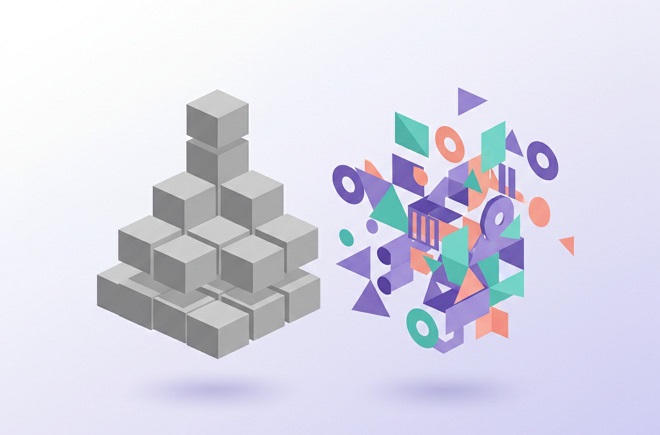
Custom Software Development vs Off-the-Shelf Software: Why Enterprises Are Making the Shift
- Amantya Technologies
- 2026-05-25, 06:24 am
- Custom Software Development
- Mobile app development , Custom software development , Custom software development company
Enterprises are steadily moving away from packaged software toward custom-built systems, as differentiation increasingly depends on how well applications support real business operations. Standard platforms are designed for broad use cases, but most organizations today operate in environments that demand flexibility, integration, and continuous evolution - something generic tools struggle to deliver.
This shift is reflected in market data. According to Grand View Research, the global custom software development market is projected to grow from $43.16 billion in 2024 to $146.18 billion by 2030. In parallel, the mobile application development market is expected to expand significantly, crossing $626 billion by 2030.
At a structural level, the role of software has changed. It is no longer a support layer—it directly enables how businesses operate, engage customers, and scale. As enterprises deal with real-time decision-making, AI-driven workflows, and increasingly complex technology ecosystems, the limitations of one-size-fits-all platforms become more visible.
What is custom software development?Custom software development is the process of designing, building, and maintaining software tailored to a specific organization’s workflows, systems, and business goals—rather than using generic, off-the-shelf solutions. |
Benefits of Custom Software Development for Enterprises
Custom software development allows enterprises to build systems around their processes rather than adapting processes to fit predefined tools. This results in tighter integration, better control over performance and security, and the ability to scale applications in line with business growth. Custom software development enables tighter alignment between business processes and technology systems.
One of the key drivers behind this shift is the cost of poor alignment. Studies indicate that organizations lose significant productivity due to fragmented and disconnected systems, with integration challenges cited as a top barrier to digital transformation initiatives.
According to McKinsey & Company, employees spend nearly 20-30% of their time dealing with inefficient processes and systems.
At the same time, mobile application development has become central to enterprise strategy. Applications are no longer standalone interfaces. They are tightly connected to backend systems, data platforms, and operational workflows. This makes the role of mobile app developers critical in building solutions that are not only user-friendly, but also deeply integrated and performance driven.
Why Custom Software Has Become a Strategic Decision
The move toward custom software development is not driven by preference. It is driven by constraint.
Off-the-shelf platforms are built for scale across industries, but modern enterprises operate in environments that demand real-time decision-making, AI-driven workflows, and deep integration across multiple systems. They also rely on domain-specific logic that reflects how their business actually functions. Generic software cannot adapt to this level of specificity without compromise.
As this complexity increases, enterprise demand for more flexible application environments continues to grow. Research from Mordor Intelligence highlights a steady rise in adoption of application development platforms designed to support scalable, integrated, and continuously evolving systems.
|
Custom Software |
Off-the-Shelf Software |
|
|
The Cost of Misaligned Systems
Many enterprise inefficiencies stem not from lack of tools, but from misaligned tools. When businesses are forced to adapt their processes to fit predefined software workflows, it creates friction - visible in workarounds, disconnected systems, and limitations in scalability.
Custom software development reverses this model. It enables software to be built around the business, allowing organizations to align systems with real workflows, integrate seamlessly across environments, and retain control over how technology evolves.
Mobile Application Development as Business-Critical Infrastructure
Mobile application development is no longer a peripheral capability. It has become central to how enterprises operate, engage, and deliver value. In many cases, it is the primary interface through which businesses function. Mobile applications are now primary interfaces for enterprise operations, not just customer engagement tools.
This shift is also reflected in user behavior. Research shows that users spend over 90% of their mobile time within applications, reinforcing the role of mobile apps as the primary interface for digital engagement.
Across industries such as banking, healthcare, retail, and logistics, mobile applications now power customer engagement, field operations, and real-time decision-making. Research from Mordor Intelligence highlights strong global growth driven by increasing digital dependence and expectations for seamless, real-time experiences.
From Apps to Systems
The more important shift is not just in scale, but in expectations.
Applications are no longer standalone products. They are part of larger, distributed systems that require deep backend integration, real-time data flows, and consistent performance in always-on environments.
This changes the role of mobile application development - from building interfaces to enabling continuous business operations. It also expands the role of mobile app developers, who must now focus on system integration, performance engineering, and alignment with business workflows.
The Product Life Cycle Is Where Most Software Fails
A significant gap in many software initiatives is not development- it is lifecycle thinking.
Applications are often built as projects, with defined start and end points. In reality, they function as products that must continuously evolve. This disconnect is where many systems begin to fail - not immediately, but over time as business needs change.
Lifecycle-led engineering ensures software remains relevant, scalable, and adaptable over time.
From Delivery to Continuous Evolution
Modern software environments demand ongoing updates, performance optimization, evolving security requirements, and feature enhancements driven by real usage data. Static delivery models cannot support this.
One of the key issues is fragmentation. Development, testing, deployment, and maintenance are often handled by separate teams, resulting in software that is delivered successfully but lacks long-term adaptability.
Product-oriented approaches address this by treating software as a continuously evolving system. Architecture is designed for scale, testing becomes continuous, and deployment marks the beginning of iteration - not the end.
Organizations that adopt this model are better positioned to reduce technical debt, respond faster to change, and ensure long-term alignment with business goals.
Why Enterprises Are Choosing Custom Software Development
The shift toward custom software development and mobile application development is ultimately driven by business pressure.
Enterprises today operate in environments that demand real-time decision-making, AI-enabled workflows, seamless digital experiences, and integration across complex ecosystems. Generic platforms are not designed to adapt at this pace or level of specificity.
Why are enterprises moving to custom software development?
- Need for real-time, data-driven decision-making
- Demand for AI-enabled workflows and automation
- Requirement for seamless digital experiences
- Increasing complexity across cloud, edge, and legacy systems
Custom software is no longer a build decision - it is a strategic capability.
As organizations accelerate digital transformation, enterprise spending on software and application platforms continues to grow steadily. According to Gartner, this reflects a broader shift toward systems that can scale, integrate, and evolve with business needs.
Custom-built systems enable organizations to embed intelligence directly into workflows, respond faster to change, and maintain greater control over performance, security, and data.
The Risk of Standing Still
The bigger risk is not failure - it is obsolescence.
As markets evolve and technology cycles accelerate, software that cannot adapt becomes a constraint. This is why enterprises are investing in modular architectures, API-first ecosystems, continuous delivery, and AI-driven automation - not as enhancements, but as foundational capabilities.
Custom software development, in this context, becomes a long-term strategy to ensure technology keeps pace with the business.
Amantya’s Approach: Build Systems, Not Silos
Amantya brings together capabilities across custom software development, mobile application development, AI and data platforms, cloud, and 5G - but the real value lies in how these are applied.
The focus is not on delivering isolated applications. It is on engineering connected, intelligent systems that align with how businesses operate and evolve.
Every solution begins with business context - understanding workflows, objectives, and long-term needs. Architectures are designed to handle scale, complexity, and integration across both legacy and modern environments.
Equally important is lifecycle thinking. Software is built to evolve continuously, ensuring that performance, scalability, and new capabilities can be introduced without disruption.
The outcome is not just functional software.
It is operational clarity, faster execution, and systems that keep pace with the business.
Key Takeaways
|
The Bottom Line: Build Software That Moves Your Business Forward
The role of software has fundamentally changed. It is no longer just supporting the business—it is shaping how the business operates, competes, and grows.
Custom software development, mobile application development, and lifecycle-led engineering are no longer independent efforts. They are tightly connected capabilities that determine how effectively an organization can adapt, scale, and differentiate.
Organizations that recognize this early are better positioned to move faster, respond to change with confidence, and build systems that remain relevant over time.
Amantya enables this shift - helping enterprises move beyond isolated applications to connected, evolving systems that deliver sustained business value.
Build Systems, Not Constraints
Your business doesn’t operate in templates. Your software shouldn’t either.
Amantya helps enterprises design and build systems that integrate, scale, and evolve with real-world complexity.
Start a Conversation
Frequently Asked Questions (FAQs)
What is custom software development?
Custom software development is the process of building software tailored to a specific organization’s workflows, goals, and systems - rather than using generic, off-the-shelf solutions.
Why are enterprises choosing custom software over packaged solutions?
Enterprises choose custom software because it aligns with business workflows, supports scalability, enables AI integration, and allows better control over performance and data.
What does a mobile app development company do?
A mobile app development company designs, builds, and maintains applications for platforms like iOS and Android, including user experience, backend systems, integration, and ongoing optimization.
What is included in the product life cycle?
Strategy, design, development, testing, deployment, and continuous improvement to ensure long-term relevance and performance.
Why is product life cycle management important?
It ensures software remains scalable, secure, and aligned with business needs while reducing technical debt.
How do I choose the right mobile app developers?
Look for teams with strong engineering expertise, business understanding, lifecycle ownership, and the ability to build scalable, integrated systems.